

Buy Bulk Ammo by the Case and Save Big Without Sacrificing Quality
When a weekend training session calls for hundreds of rounds downrange, a shooter reaching for individually boxed cartridges quickly runs low, whereas opening a single bulk ammo case—often containing 500 or 1,000 rounds in loose trays or sealed bags—ensures the session continues without interruption. Bulk ammo is simply factory-new or remanufactured ammunition packaged in large quantities, typically lacking the individual cardboard boxes and plastic trays of retail packs, which reduces packaging waste and per-round cost. The weight and volume of a bulk case demand a sturdy range bag or dedicated ammo can, and you should always verify the cartridge’s headstamp and lot number before loading magazines. Because the rounds are identical in specifications to their boxed counterparts, they perform exactly the same in your firearm, with the primary practical difference being the efficient, high-volume supply you have on hand.
Why Buying in Volume Actually Saves You Money
Buying bulk ammo drops the per-round cost dramatically because manufacturers and retailers price higher quantities at thinner margins, passing the savings directly to you. A case of 1,000 rounds often costs 20–30% less per cartridge than four boxes of 50, meaning you stretch every dollar toward practice, not packaging. Shipping is also a hidden killer—one flat fee on a heavy crate beats repeated small-order deliveries, so you pay for lead, not logistics. **The math is simple: fewer transactions, lower unit price, more trigger time.** Q&A: Why does volume save money? Because fixed costs like shipping and handling spread across more rounds, while tiered pricing rewards bulk buyers with steep discounts. Stockpiling also shields you from sporadic price jumps, locking in today’s rate for tomorrow’s range sessions.
Breaking Down the Per-Round Price Drop at Different Case Sizes

The per-round price drop becomes most visible when you compare 50-round boxes to 500-round cases, then again at 1,000-round cases. A 50-round box of 9mm might cost $15, or $0.30 per round; a 500-round case often lands near $130, cutting per-round cost to $0.26; a 1,000-round case can push that down to $0.23 or bulk ammo for sale less. That $0.07 difference per round translates to $70 saved on a single case—money that covers shipping or a future range trip. The steepest savings curve sits between 50 and 500 rounds; beyond 1,000, the drop flattens as manufacturers’ margins compress. Volume pricing rewards the 1,000-round threshold because retailers absorb restocking fees and pass on bulk-rate discounts, making larger cases the clear value sweet spot.
Q: Why does the per-round price drop slow down after 1,000 rounds?
A: Because freight and packaging costs become a fixed percentage rather than a shrinking variable—so the savings per additional round narrows, but the absolute dollars saved still grow with case size.
How Shipping Fees and Hazmat Charges Affect Your Final Cost Per Round
When you compare bulk ammo prices, the sticker price per box is only half the story—shipping and hazmat fees often decide your true cost per round. A flat shipping charge of $15 hurts a 200-round order far more than a 2,000-round pallet, adding pennies instead of dollars to each cartridge. Hazmat fees, typically $20–$30 for ground transport of primers and powder, are fixed regardless of quantity, so spreading that cost over more boxes is the only way to dilute it. Free shipping thresholds usually kick in around $150–$200, so pushing your order just past that mark can erase the fee entirely. Your final 7.62 Tokarev Ammo for Sale cost per round drops dramatically when you calculate shipping and hazmat into the total, not the base price.
Q: How do shipping fees and hazmat charges affect your final cost per round?
A: They add a fixed overhead that shrinks per cartridge as order size grows—$50 in combined fees on 500 rounds adds 10 cents each, but on 2,000 rounds adds only 2.5 cents, making volume the lever that kills the sting.

Calculating the Break-Even Point for Your Personal Shooting Frequency
To make bulk ammo work for you, calculate your personal break-even point by dividing the upfront case cost by your monthly round count. If you shoot 200 rounds per month, a 1,000-round case covers five months—but only if your storage and budget allow that wait. Compare the per-round price of a box versus a case, then multiply the savings by your estimated monthly usage. When your break-even point lands under six months, the volume discount outpaces the capital tied up. Calculating your break-even point by shooting frequency prevents overbuying and turns bulk savings into a predictable, repeatable win.
Your break-even point is the months it takes for per-round savings to offset the case’s upfront cost—match it to your real shooting pace, .243 Ammo for Sale not a fantasy stockpile.
Matching the Right Load to Your Firearm’s Purpose

When buying bulk ammo, the load must serve the firearm’s *actual* role, not just its caliber. For a precision rifle used in competition, a high-volume case of budget 147-grain match ammo will group inconsistently, wasting both money and barrel life—whereas a modest batch of premium 168-grain hollow-points delivers the sub-MOA consistency your rig demands. Conversely, a defensive handgun or patrol carbine prioritizes reliable feeding and terminal expansion over tight groups, so bulk-purchasing 1000 rounds of quality bonded JHP beats 5000 rounds of flat-nose training fodder that risks jams. Match the bullet weight and pressure curve to your platform’s intended distance and target type, as a short-barrel AR-15 needs faster-burning powder loads than a 20-inch rifle. Never assume “bulk” means “universal”—a case of soft-point hunting rounds will under-penetrate on a hog but over-penetrate in home defense. Your firearm’s purpose dictates powder burn rate, projectile construction, and velocity window, so a single bulk purchase cannot serve every scenario. Before committing to a case, test a box first; if the same load cycles, feeds, and prints acceptably under your expected conditions, then stock up.
Choosing Between Full Metal Jacket, Hollow Point, and Soft Point for Practice vs. Defense

For practice, full metal jacket (FMJ) rounds are the clear choice in bulk ammo because they are inexpensive, feed reliably, and cause less barrel fouling, making them ideal for high-volume range sessions. However, FMJ’s penetration-focused behavior is unsuitable for defensive use, where hollow points excel by expanding upon impact to transfer energy and reduce over-penetration risk. Soft points offer a middle ground, expanding reliably through barriers like clothing but often costing more than FMJ, yet less than premium hollow points. When buying in bulk, prioritize FMJ for drills and malfunction clearance, while reserving smaller quantities of hollow points for carry or home-defense magazines, ensuring your practice ammo’s point of impact matches your defensive load’s weight and velocity.
FMJ rules practice due to cost and reliability; hollow points dominate defense for controlled expansion; soft points serve as a budget-friendly defensive compromise, so stock bulk FMJ for training and keep defensive rounds separate.
Understanding Grain Weight and Bullet Velocity for Different Barrel Lengths
Selecting bulk ammo requires matching grain weight and barrel length to achieve optimal bullet velocity. A heavier grain bullet (e.g., 147gr) in a short barrel (e.g., 4 inches) often fails to reach full powder burn, reducing velocity and increasing muzzle flash. Conversely, a lighter grain round (e.g., 115gr) in a longer barrel (e.g., 16 inches) can exceed pressure curves, altering POI. For bulk purchases, test 2–3 grain weights across your specific barrel length to verify velocity consistency, as longer barrels generally favor slower powders that fully ignite, while shorter barrels benefit from faster-burning loads. This prevents wasted ammunition and ensures reliable terminal performance.
Q: How does barrel length affect bullet velocity for a fixed grain weight in bulk ammo?
A: Each inch of barrel length adds roughly 25–50 fps for rifle cartridges, but for handgun-length barrels, the gain shrinks to 10–20 fps per inch, especially with heavy grains; thus, short barrels require lighter grains to maintain sufficient velocity.
When to Stick with Brass-Cased Rounds Over Steel or Aluminum Options
Stick with brass-cased rounds for bulk ammo whenever your firearm has a tight chamber or a critical reliability role, such as a defense or competition pistol. Brass’s malleability forms a better gas seal under high pressure, preventing the carbon fouling and stuck-case failures common with steel or aluminum in these contexts. Choose brass over steel for extended bulk training sessions where rapid follow-up shots are mandatory, as steel’s harder alloy increases extractor wear and can deform in unsupported chambers. Opt for brass instead of aluminum when you intend to reload your bulk-purchased spent casings, since aluminum cracks at the case mouth after one firing. In cold-weather outdoor shooting, brass also 9x23mm Winchester Ammo for Sale resists the brittle failure that affects aluminum at low temperatures, making it the safest bulk choice for action drills.
How to Store Large Quantities Without Ruining Them
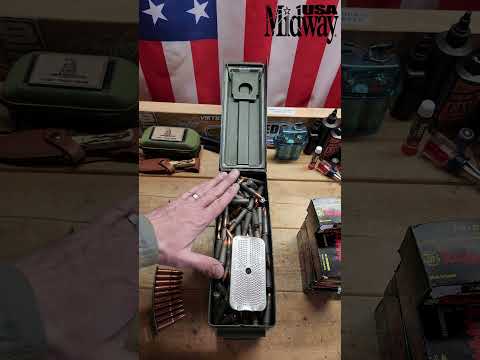
Storing bulk ammo without ruining it comes down to controlling three things: moisture, temperature swings, and physical compression. First, get a heavy-duty, sealed ammo can—metal or thick polymer—and drop in a few desiccant packs to keep humidity low; moisture is the enemy that corrupts primers and powder. Stack cans off the concrete floor on wooden pallets or shelves, since cold concrete sweats and invites rust. Keep the space consistently cool, not hot, because extreme heat accelerates powder degradation, and avoid dramatic temperature changes that create condensation inside sealed containers. Rotate your stock, using the oldest rounds first, and label every can with the date and caliber. Even if you do everything right, a tiny crack in a seal can silently ruin an entire stash, so check those gaskets yearly. Finally, don’t pile cans more than three high—crushing pressure can deform cases and hinder feeding. Air-tight beats water-tight every time, and dry, stable, and gently stacked is the only recipe that keeps your bulk ammo shooting straight for years.
Controlling Humidity and Temperature in Ammo Cans and Storage Rooms
For bulk ammo, temperature stability is as critical as desiccant placement inside sealed ammo cans. Store cans in a climate-controlled room kept between 55–70°F, avoiding attics or garages where thermal cycling forces humid air in and out through imperfect seals. Add reusable silica gel canisters to each can, but recharge them monthly by baking at 200°F for two 6mm ARC Ammo for Sale hours—they fail silently when saturated. For the storage room itself, use a standalone dehumidifier set to 35–45% relative humidity; below 30% can crack case necks, above 50% invites corrosion on brass. Place hygrometers inside one reference can and on the wall, checking weekly. Never open cans in a damp basement; instead, transfer ammo to a dry intermediate bin before handling to minimize exposure.
Stable 55–70°F temps and 35–45% room humidity, paired with recharged silica gel in each sealed can, prevent corrosion and preserve primer reliability over long-term bulk storage.
Rotating Your Stockpile to Keep Older Cartridges on Top
When you buy bulk ammo, rotating your stockpile ensures that older cartridges are always used first, preventing age-related degradation of powder and primers. Stack new cases at the bottom or back, then pull from the top or front for range days. This forward-dates your inventory naturally, so nothing sits forgotten for years. Check lot numbers on boxes and group them by purchase date; write the month and year on each can with a grease pencil. If you store in ammo cans, tip the newest load in last, then when you open the lid, the oldest is right there. Make it a habit—every time you buy, move the old batch to the top and push the new underneath. This simple discipline keeps your shooting consistent and your investment functional.
Spotting Corrosion or Tarnish Early—What It Looks Like and What to Do
Keep an eye out for that dull, dusty, or slightly greenish-whitish haze on brass, or dark splotches on steel cases—that’s early corrosion or tarnish creeping in. Don’t ignore a faint musty or metallic smell from your ammo bins either. If you spot it, act fast: first, isolate the affected rounds immediately so it doesn’t spread. Then, gently wipe off surface tarnish with a dry cloth—never oil or .223 Ammo for Sale abrasive polish. For stubborn spots, use fine steel wool on the case only. Finally, check your storage humidity and add desiccant packs. Catching it subtle means a quick fix; waiting means dead primers. A simple visual once a month saves your whole stash.
Practical Tips for Working Through a Case of Ammo
Working through a case of bulk ammo is about building efficient habits, not just burning rounds. Start by sorting your case into manageable batches of 50 or 100 rounds to maintain steady, consistent shooting without constant reloading pauses. Rotate your stock by using the oldest sealed boxes first, ensuring your bulk ammo investment stays fresh and reliable. Incorporate a mix of drills—like controlled pairs and failure drills—to keep each session purposeful, turning plain practice into practical ammo management. Track your round count on the case’s label with a simple tick mark after every range day; this prevents you from being caught empty at the lane. Finally, always retain the original case box and inner trays for clean, safe transport and future storage of loose rounds. This methodical approach makes each bulk purchase a tool for measurable improvement, not just a stockpile.
Setting Up a Per-Session Round Budget to Make Your Supply Last
When you buy in bulk, the best way to stretch that stash is to set a per-session round budget before you even hit the range. Decide how many rounds you’re willing to burn each outing—say, 100 for pistols or 50 for rifles—and stick to it like a rule. That way, a 1,000-round case lasts ten clean trips instead of vanishing in two chaotic weekends. Start by dividing your total case count by how many range days you want it to cover. Then, lock that number in as your hard cap, and count as you go. Treat it like a bank account: no dipping into next week’s allotment, no “just five more” exceptions. This simple math keeps 6mm Creedmoor Ammo for Sale your bulk supply steady, your wallet happy, and your training consistent month after month.
Mixing New Lots with Existing Inventory for Consistent Zero and Accuracy
When integrating a new lot of bulk ammo with existing inventory, shoot for consistency in zero by first segregating the new lot and firing a confirmation group before mixing it into your main supply. Even minor propellant or projectile variations can shift impact points, so test the new lot at your typical engagement distances to record any point-of-aim shift. If the shift is under half an inch, you can safely blend the lots in a proportionate mixing strategy—combining equal amounts from both lots in a single magazine or box to average out ballistic differences. Label the mixed container with the date and average velocity to maintain a stable reference for future zero checks.
Mixing new lots with existing inventory requires verifying the new lot’s zero first, then blending proportionally to preserve consistent accuracy and point of impact.
Using a Dump Pouch or Loading Strips to Speed Up Range Time with High Volume
When working through a case of bulk ammo, a dump pouch eliminates the repetitive motion of reaching into a box, letting you palm rounds directly from a waist-mounted pouch. Loading strips, meanwhile, allow you to pre-stage five or ten cartridges, then press them into a magazine in one deliberate motion, cutting reload time significantly. For high-volume sessions, this translates into more trigger time and less fumbling, especially when shooting from a bench or prone position. Streamlined reloading with dump pouches and loading strips keeps your focus on the firearm, not the packaging, making it easier to sustain a steady cadence without breaking your shooting rhythm.
Dump pouches and loading strips reduce handling time and magazine reload effort, enabling faster, uninterrupted range sessions with bulk ammo.
Common Mistakes to Avoid When You Buy in Bulk
When you buy bulk ammo, the biggest mistake is ignoring your firearm’s specific caliber and grain weight—grabbing a “deal” on the wrong load wastes money and can hurt accuracy. Another common error is skipping storage prep; 7.5×55 Swiss Ammo for Sale loose rounds in a damp garage will corrode, so invest in airtight ammo cans with desiccant packs. Don’t assume all bulk ammo is the same quality—check for remanufactured or steel-cased options that might jam in finicky guns. Finally, avoid overbuying a single lot without testing a small box first; a subtle difference in primer hardness can cause misfires. And never forget to rotate your stock, using the oldest rounds first to prevent powder degradation.
Overlooking Lot Numbers and How They Affect Repeatable Accuracy
When you buy bulk ammo, overlooking lot numbers can silently destroy your repeatable accuracy. Each lot represents a specific production run, and subtle variations in powder charge, case dimensions, or bullet seating occur between runs. Mixing lots in the same magazine or session introduces inconsistent velocities and point-of-impact shifts, making it impossible to trust your zero. To preserve lot-specific consistency for precision shooting, first check the lot number printed on every case or box; if you receive mixed lots, separate them physically and zero with the largest batch. Never assume identical packaging means identical ballistics. Always log the .260 Remington Ammo for Sale lot number with your target data so you can reproduce conditions later.
**Q: How does overlooking lot numbers affect repeatable accuracy?**
A: It introduces hidden variables—different lots can differ by 20–40 fps in velocity, which translates to 0.5–1 MOA shift at 100 yards, invalidating your sight settings.
Ignoring the Difference Between Remanufactured and Factory-New Rounds
Treating remanufactured and factory-new rounds as interchangeable is a costly error when buying bulk ammo. Remanufactured ammunition uses once-fired brass that has been inspected, resized, and reloaded, while factory-new rounds feature virgin cases with pristine tolerances. This distinction directly affects consistency in pressure and bullet seating depth, which can translate to noticeable accuracy shifts at distance. For competition or defensive practice, relying on remanufactured loads without verifying their performance against your firearm’s zero will waste time and potentially undermine training. Before committing to a bulk purchase, confirm the product’s labeling—some “remanufactured” brands are actually reconditioned surplus, not true reloads. Verifying ammunition origin before bulk checkout prevents surprises. Follow this sequence:
- Check the box or listing for “remanufactured,” “reloaded,” or “factory-new” phrasing.
- Test a small sample (50–100 rounds) for function and groups.
- Compare velocities to factory spec to ensure reliable cycling.
- Only then buy the full .22-250 Ammo for Sale bulk quantity.
Ignoring this difference risks jams, inconsistent trajectories, and wasted cash on ammo that underperforms your intended use.
Choosing Caliber Availability Over What Your Gun Actually Digests Well
When you buy in bulk, it’s tempting to chase the cheapest or most plentiful caliber on the shelf, but choosing caliber availability over what your gun actually digests well is a fast track to wasted cash and frustration. That screaming deal on 9mm means nothing if your pistol prefers hotter loads or a specific bullet profile. Bulk ammo should match your firearm’s proven diet—not just what’s stacked high at the store. A gun that jams on a bargain round turns your range day into a malfunction drill. Reliability testing a small box first beats getting stuck with 500 rounds your gun hates.
- Always run a test box of any new bulk caliber through your firearm before committing to a case.
- Check your owner’s manual for recommended bullet weights and pressure ratings—ignore this and you’ll eat feed issues.
- If a caliber is super common but your gun chokes on it, buy only what you can verify cycles smoothly.
- Keep a log of which bulk lots your gun digests cleanly for future purchases.